A traveler's guide to Cortina d'Ampezzo
Cortina is a town first. Pick one ski area each day, get there simply, and leave time to walk the corso.
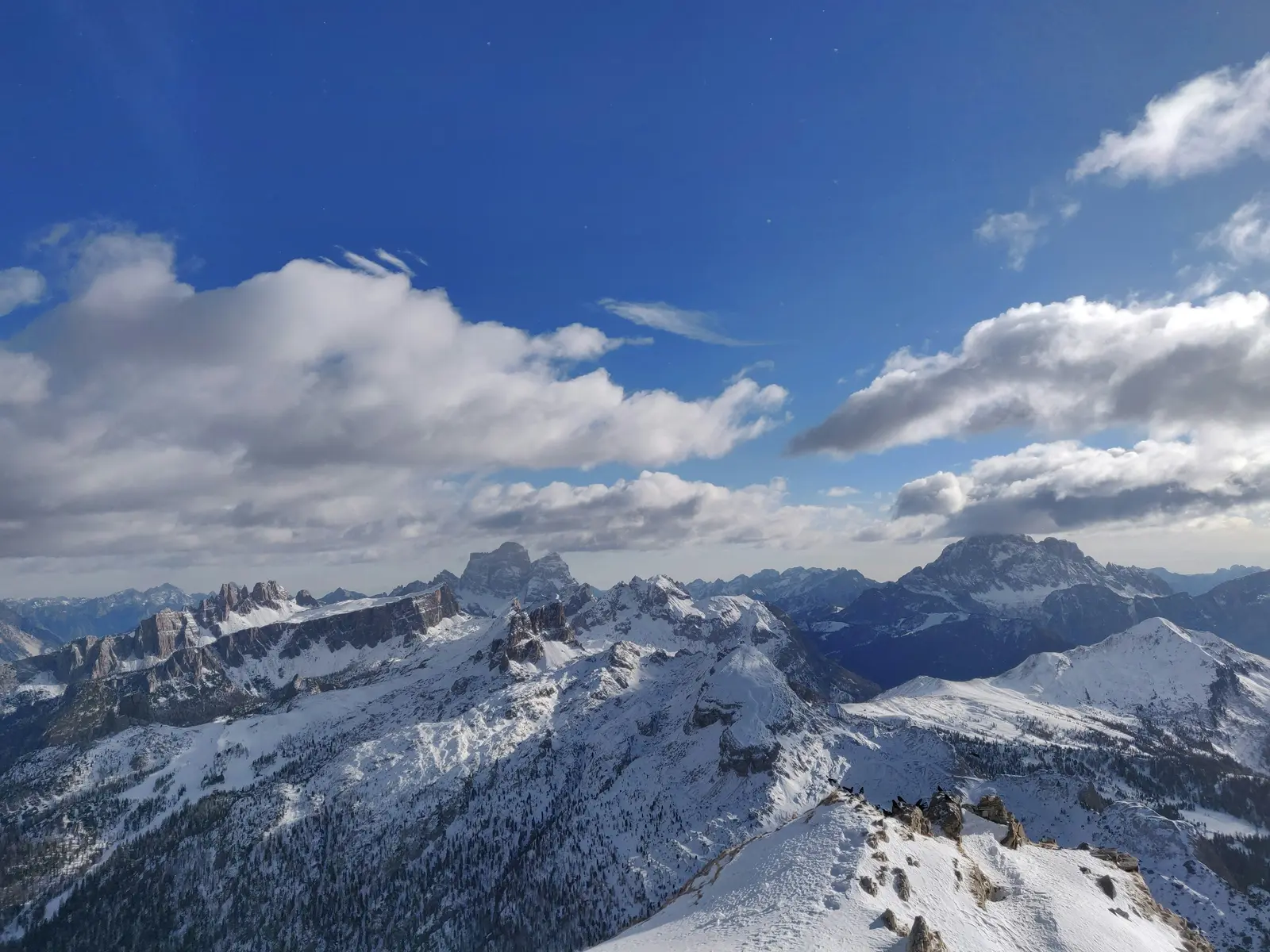
Cortina d'Ampezzo is the ski resort in the Ampezzo valley, and the skiing is several areas around a serious town. Tofana, Cristallo, Faloria, and the Cinque Torri are different mornings. The Dolomiti Superski pass ties them together. The mountains are the reason the town hosted the 1956 Winter Olympics and skied again for Milano Cortina 2026.
When to go
January through March. The Dolomites are beautiful in January light and busy in February. Snow varies by aspect more than it does in a single high bowl. A storm day is a town day, and the town can absorb it. The Olympic weeks of the past are not a reason to expect empty lifts in a holiday.
On the hill
Do not expect a single trail map that starts at the hotel door and ends in another country, even though the Sella Ronda exists farther west on the same pass system. In Cortina you choose Tofana for the big skiing, Faloria or Cristallo for a different view, and Cinque Torri for a half day among the towers. Buses and a car are the links. Dolomiti Superski is the pass that makes the variety rational. Marked runs are the trip. The pale rock is steep the moment you leave them.
Village and passes
The center is walkable and dressier than a French purpose-built station. Stay there if evenings matter. A car is useful for the outlying areas and painful on a snowy evening in town. Buses run to the main lifts in season. Book dinner. The pass is regional; buy the coverage you will use, not the largest one out of anxiety.
If you only remember this
- One area a day. The Dolomites are not a single linked village.
- A car helps, and the town does not want it at dinner.
- Dolomiti Superski is the pass that matches a varied week.
- A weather day in Cortina is still a good day. Use it in town.