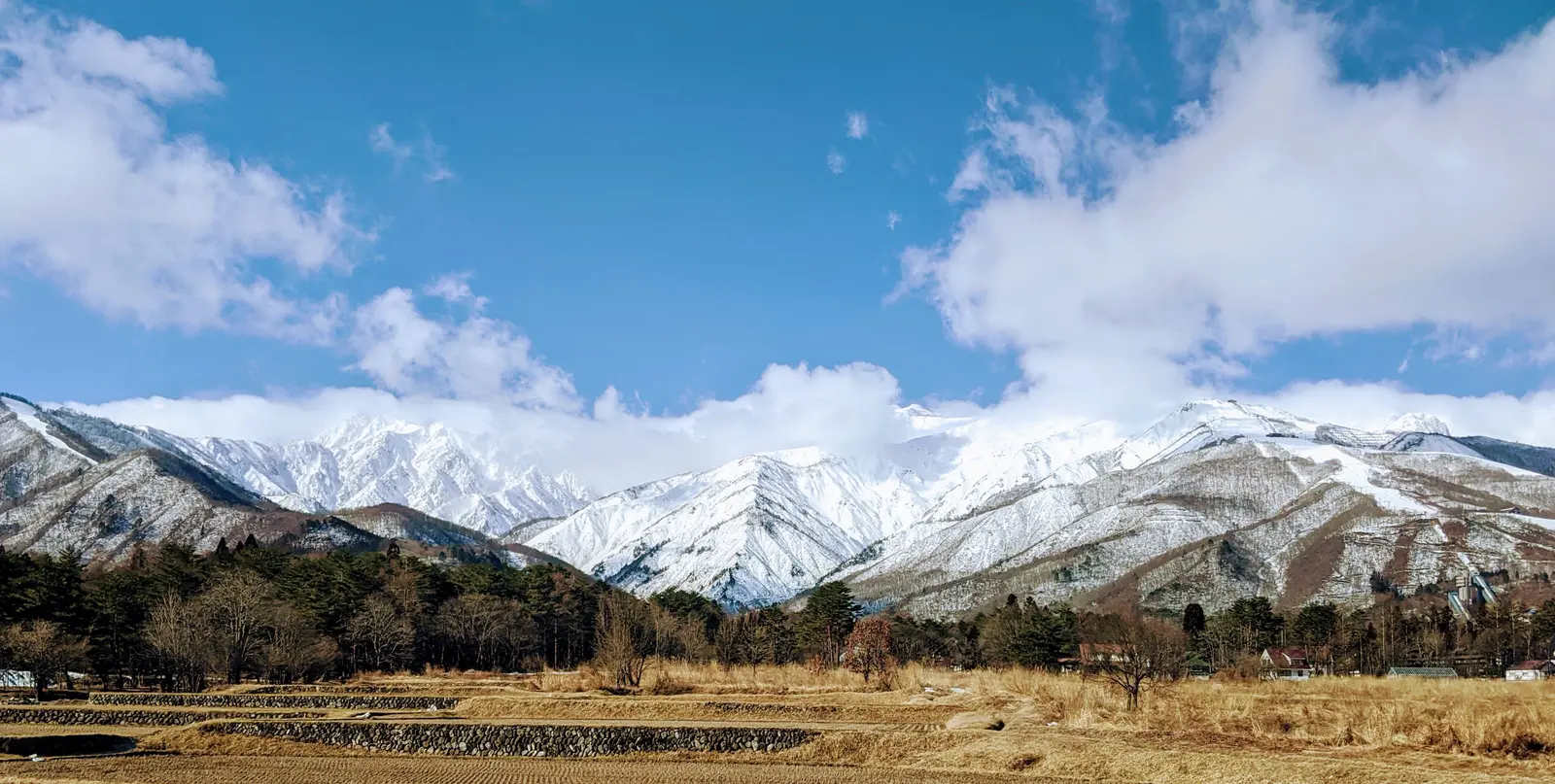
A traveler's guide to Hakuba
Stay near Happo if that is the mountain you want at 9 a.m. Use the valley pass for a second day, not for every lunch.
Hakuba is the ski resort valley in Nagano that hosted alpine events for the 1998 Winter Olympics. Happo-one is the mountain to book. Cortina, Iwatake, Tsugaike, and Goryu are neighbors on a valley pass. It is less of a single international village than Niseko, and the skiing is why you came.
When to go
January and February. Nagano snow is excellent and slightly less famous than Niseko's, which is a virtue on a Saturday. March stays cold enough in the northern Alps of Japan more often than newcomers expect. Holiday weeks around New Year are busy and priced accordingly.
On the hill
Happo-one is the balanced mountain: a long base-to-top, racing history, and terrain that a strong intermediate can use. The other valleys resorts are worth one day each rather than a frantic link. Tsugaike and Cortina feel different from Happo. A valley pass makes that sampling cheap. Marked runs and the resorts' own tree zones, where they are open, are the skiing. The ridgelines are not a casual hike.
Village and passes
Hakuba is a string of lodges and a town, not one pedestrian street. A car is the easy answer and the buses work if you learn the route you actually need. Echoland and the Happo base are the convenient beds for Happo-one. Tokyo is a train ride of several hours, which is a pleasant arrival and a poor idea if you have a same-day flight. English is around and Japanese is the language. The food is a reason to stay in at night.
If you only remember this
- Happo-one is the main event. Sleep near it.
- The valley pass is for a second mountain, not a daily commute.
- A car simplifies Hakuba. A bus works if the route is yours.
- The train from Tokyo takes a real part of the day. Enjoy it or fly closer.