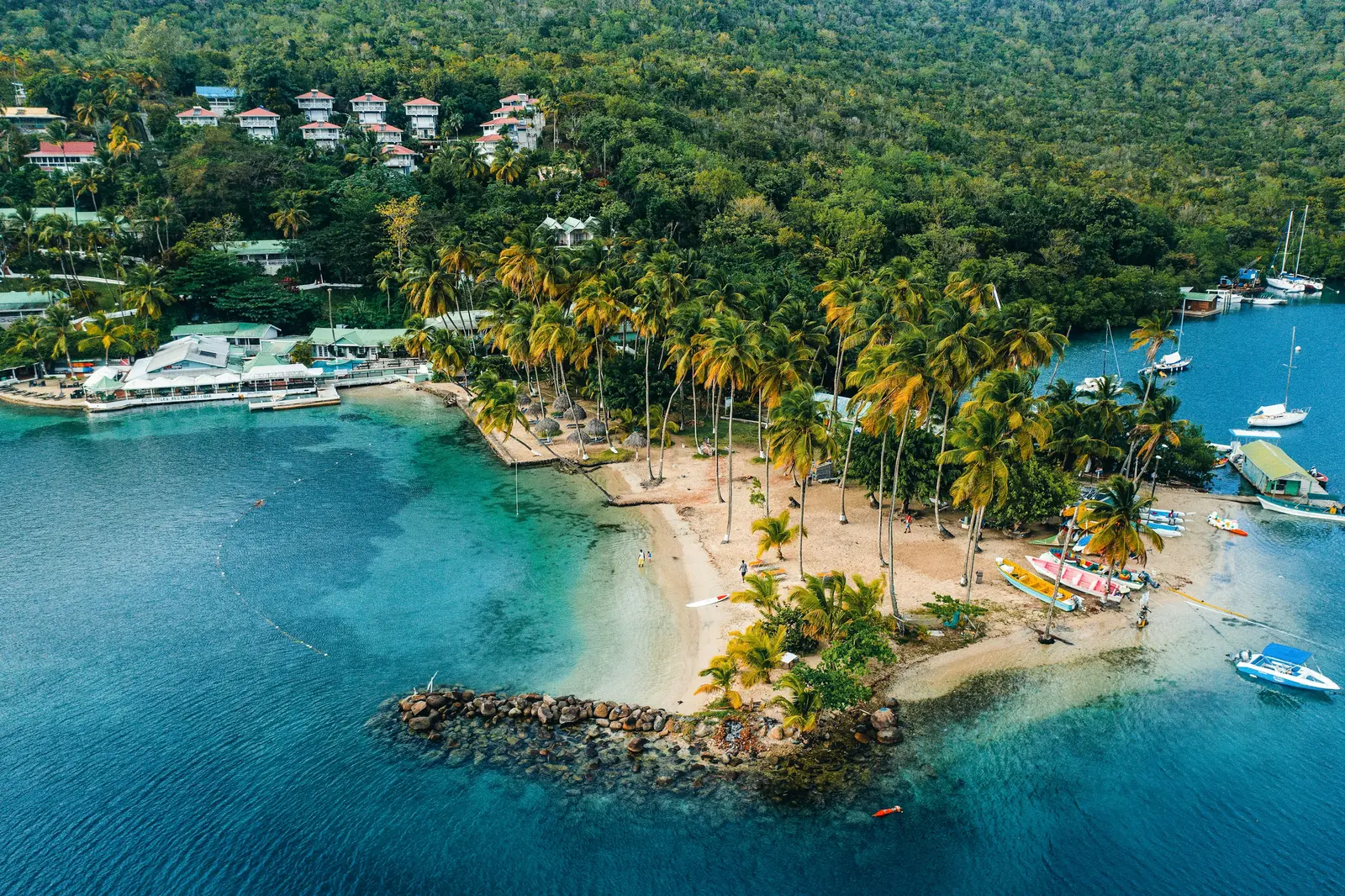
A traveler's guide to St. Lucia
Choose north or south and stay there. Crossing the island for dinner is how a beach week becomes a driving week.
St. Lucia is a volcanic island whose beaches come with a skyline. The Pitons rise behind the south, and the bays there are smaller and steeper. The north is flatter, easier, and where a lot of the resorts settled. The drive between them is the tax.
When to go
The dry season is December to April. Summer is humid, lush, and cheaper, with a higher chance of a heavy afternoon. The sea is warm all year.
The beach
Reduit in the north is the long, easy beach. The south's famous sands are pocket bays with dark sand and the Pitons in the frame. Some of the best swimming is in front of a resort that still allows a day pass or a boat arrival.
In the water
The reef at Anse Chastanet is the snorkel people mean. Boat days toward Soufrière are worth it. The Atlantic side is not your swim.
If you only remember this
- Flights land near the north. A south-coast hotel is a winding transfer.
- The geothermal springs are a half-day, not a second destination.
- Rain forest hikes want closed shoes you may not have packed.
- Friday-night fish fries are the local calendar. Ask which village has one.